
How a Rural Alabama School System Outdid the Country with Gains in Math
While the rest of the country’s schools were losing ground in math during the COVID pandemic, student performance in a rural Alabama school district was soaring.
Piedmont City schools notched significant improvement in math, landing in the top spot among school districts across the country in a comparison of scores from before and during the pandemic. Nationwide, students on average fell half a year behind in math, researchers say.
Piedmont, a 1,100-student district where seven out of 10 qualify for free or reduced-price lunch, has stuck with an approach it adopted before the pandemic: It gave teachers more time to dig into data on students’ scores and lengthened classes to help them focus on specific skills.
“We made a total transformation about five years ago,” Superintendent Mike Hayes said. “We decided that we were going to let data make every decision.”
In other words, Piedmont teachers use test scores to see where kids are struggling and then target teaching to each kid. And then repeat.
Read the full article at AP.
Stay in the Know
Sign up for updates on our latest research, insights, and high-impact work.
"*" indicates required fields
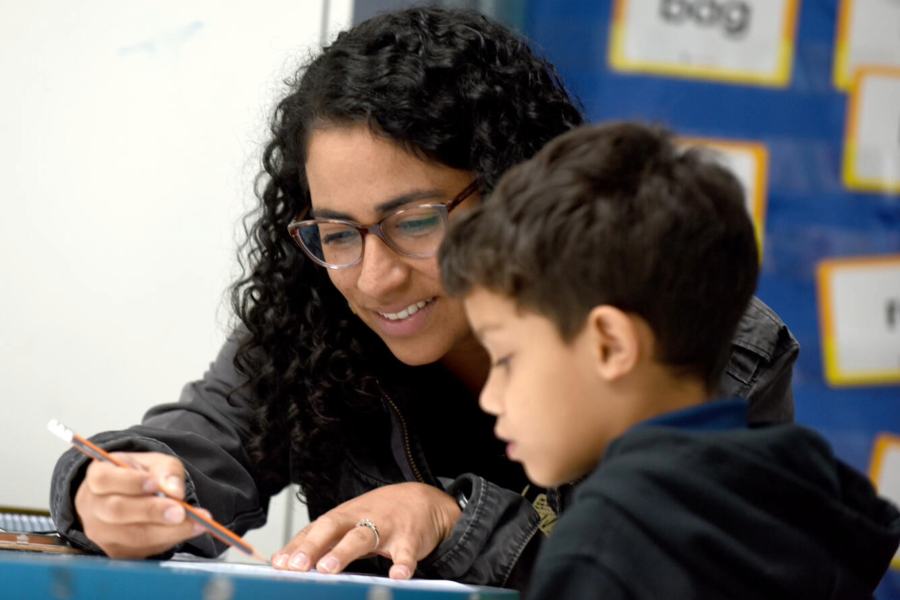
A teacher leads a one-on-one reading session focused on strategy and engagement.
About TNTP
TNTP is the nation’s leading research, policy, and consulting organization dedicated to transforming America’s public education system so that every young person thrives.
Today, we work side-by-side with educators, system leaders, and communities across the nation to reach ambitious goals for student success.
Yet the possibilities we imagine push far beyond the walls of school and the education field alone. We are catalyzing a movement across sectors to create multiple pathways for young people to achieve academic, economic, and social mobility.