Case Study
Improving Postsecondary Planning with the Texas Effective Advising Framework
The Challenge
Results
Evidence of Strong Support from Educators
As the initiative expanded, TNTP and the Texas Education Agency prioritized listening to the staff members who are closest to the work. In May 2026, more than 300 district and campus staff members shared feedback on their experiences participating in the pilot, and 94 percent of staff surveyed reported satisfaction with their EAF coaching experience. Counselors pointed to the value of having dedicated coaching support, practical tools, and protected time to focus on advising as part of their broader counseling programs. Together, this feedback suggests that consistent coaching and protected time help counselors move from siloed activities to coherent advising systems.
As a district staff member shared, “[Our coach] has helped us to find different avenues through which we can better reach our students and help them understand the support that we are providing to them. As a result, our student outcomes have greatly improved regarding our college, career, and military readiness, both academically and with industry certifications.”
Results that Make a Difference for Young People
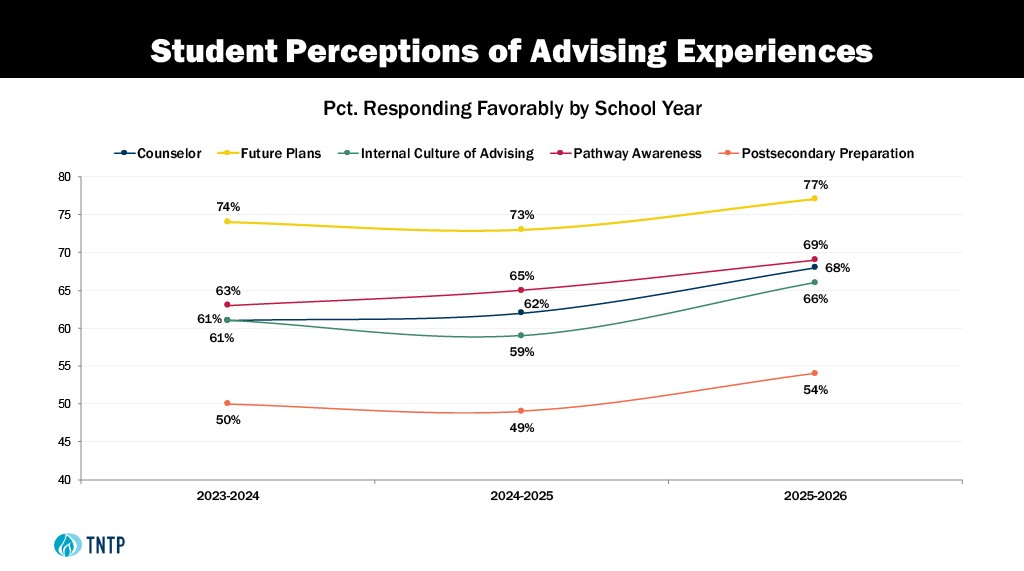
The most important stakeholders of the EAF program are the students, which is why participating districts gather feedback from students via an anonymous survey each year. Students consistently reported positive changes in their advising experiences: Over three school years (2023–24 through 2025–26), student perceptions improved by 3 to 7 percentage points across all topics, including access to counselors, awareness of pathway options, and postsecondary planning support.
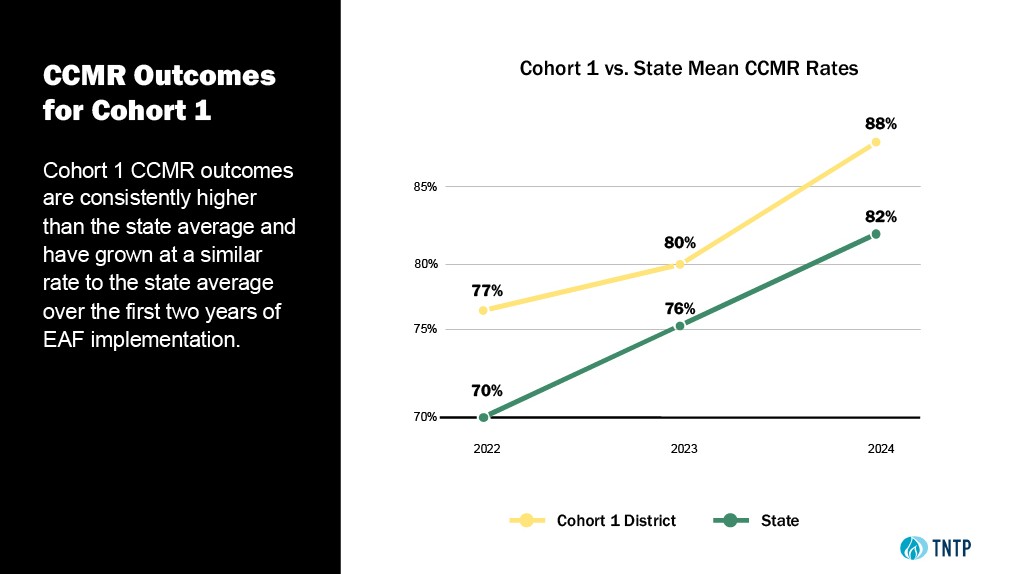
In Texas, a set of indicators known as College, Career, and Military Readiness (CCMR) measures how prepared students are for postsecondary success. Students demonstrate their readiness by meeting specific criteria, such as earning an approved industry-based certification or completing dual-credit coursework. CCMR scores contribute to each district’s A-F rating on the state’s accountability system.
The first cohort of EAF-participating districts gained an average of 11 points over two years of working with the program, and the second cohort gained an average of 7 points in just their first year. Both cohorts started at a higher CCMR rate than the state average but still showed the same or higher rate of growth as the state. From 2021-23, EAF districts showed the biggest improvements in students meeting the CCMR indicators of “approved industry-based certificates” and “Texas Success Initiative Assessment (TSI) criteria in both [English Language Arts Reading and Math].”
Advancing a Statewide Vision for Student Postsecondary Success
By strengthening advising systems and building educator expertise, the Effective Advising Framework helps districts support students as they plan for life after high school. The work empowers students to take ownership of their academic and career decisions while equipping counselors with the tools, structures, and support to guide them.
As the partnership continues, TNTP and the Texas Education Agency are focused on sustaining and strengthening this statewide model, so more students across Texas can access clear, connected pathways to their futures.
Related Topics
Stay in the Know
Sign up for updates on our latest research, insights, and high-impact work.
"*" indicates required fields

Five Lessons from TNTP’s Futures Design Studio
One year into TNTP's Futures Design Studio, five lessons are shaping how we learn, innovate, and build for what's next.

Beyond Opportunity
TNTP embraces the challenge of this decade: to build an infrastructure for human capability so every young person can navigate pathways to opportunity.

From Coherence to Careers: How States Can Better Support Today’s Students
This roadmap identifies three priorities for state policymakers in education: coherence across K-12 systems, education-to-career strategies, and responsible use of AI.

Coherence 101: What Is It, and Why Does It Matter?
Coherence across all instruction and systems ensures that every student can access challenging, grade-level learning so those who have fallen behind can catch up.

Preparing Fifty Million Young People for Their Futures
TNTP’s new strategic plan is designed to prepare 50 million young people for meaningful work and a meaningful life, bridging the gap between access and capability.

A teacher leads a one-on-one reading session focused on strategy and engagement.
About TNTP
TNTP is the nation’s leading research, policy, and consulting organization dedicated to transforming America’s public education system so that every young person thrives.
Today, we work side-by-side with educators, system leaders, and communities across the nation to reach ambitious goals for student success.
Yet the possibilities we imagine push far beyond the walls of school and the education field alone. We are catalyzing a movement across sectors to create multiple pathways for young people to achieve academic, economic, and social mobility.